You can replace your lawn with low-maintenance alternatives like ornamental grasses, which offer year-round texture and vivid fall color with minimal care. Try clover for a green, drought-tolerant ground cover that fixes its own nitrogen, or choose creeping thyme and sedges for mow-free variety. Moss thrives in shade, while xeriscaping with succulents and native plants reduces water use. Hardscaping with stone or gravel adds durable, weed-suppressing surfaces—each option saves time and water, and they all bring unique benefits worth exploring further.
TLDR
- Ornamental grasses like ‘Blonde Ambition’ offer year-round texture, vivid fall color, and need only seasonal cutting with no mowing.
- Ground covers such as creeping thyme, clover, and sedges suppress weeds and replace grass without mowing or frequent watering.
- Moss thrives in shady, low-traffic areas, stays green with minimal care, and requires no mowing or fertilizing.
- Clover forms a durable, green lawn alternative that fixes nitrogen naturally and tolerates foot traffic with zero mowing.
- Xeriscaping with drought-tolerant plants and permeable hardscaping eliminates mowing while reducing water and maintenance needs.
Ornamental Grasses for Effortless Beauty
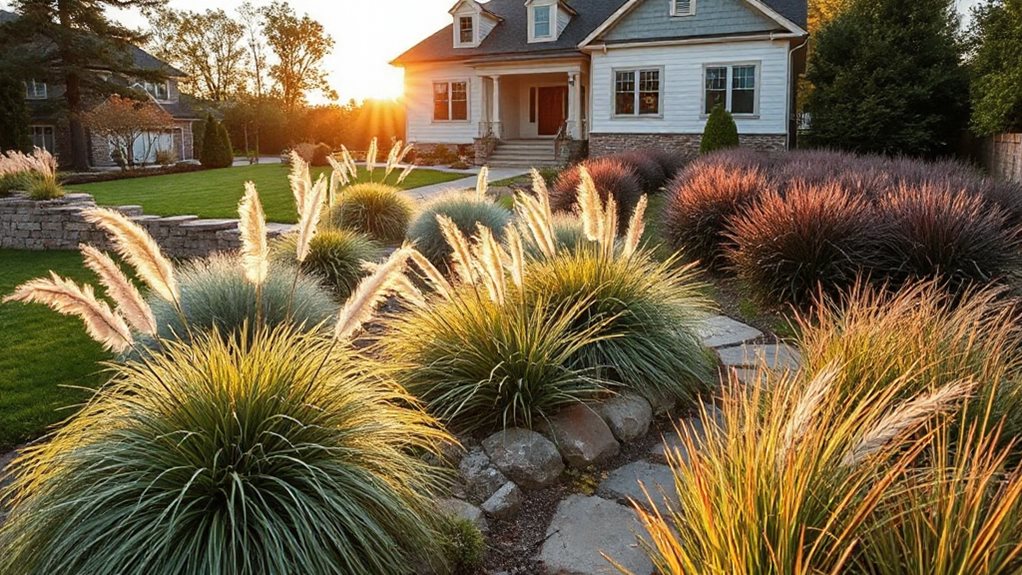
Convert your yard into a low-maintenance haven by choosing ornamental grasses that thrive with minimal care. You’ll enjoy drought-tolerant, pest-resistant plants needing no fertilizer and only seasonal cutting. Consider grouping plants in appropriately sized raised beds to give roots room and simplify watering and maintenance.
With year-round texture, vivid fall color, and adaptability to sun or shade, these grasses fit seamlessly into your scenery, offering beauty and ease while reducing mowing and watering demands with confidence and style.
Some grasses can spread or reseed, so selecting well-behaved varieties like Bouteloua gracilis ‘Blonde Ambition’ ensures your landscape stays stunning without becoming high maintenance.
Ground Covers That Eliminate Mowing
Step into a yard that thrives on its own—where lush ground covers replace thirsty grass and eliminate the need for constant mowing.
You’ll love creeping thyme’s fragrance and clover’s resilience, while pachysandra and vinca minor thrive in shade, suppressing weeds.
Sedges offer grass-like texture with less work.
Together, they create a sustainable, low-maintenance scenery you can enjoy without the chore of weekly mowing.
Coneflowers also pair beautifully with ground covers to attract pollinators and add seasonal color, especially when used near drought-tolerant plants.
Lush Moss for Shady, Low-Traffic Areas
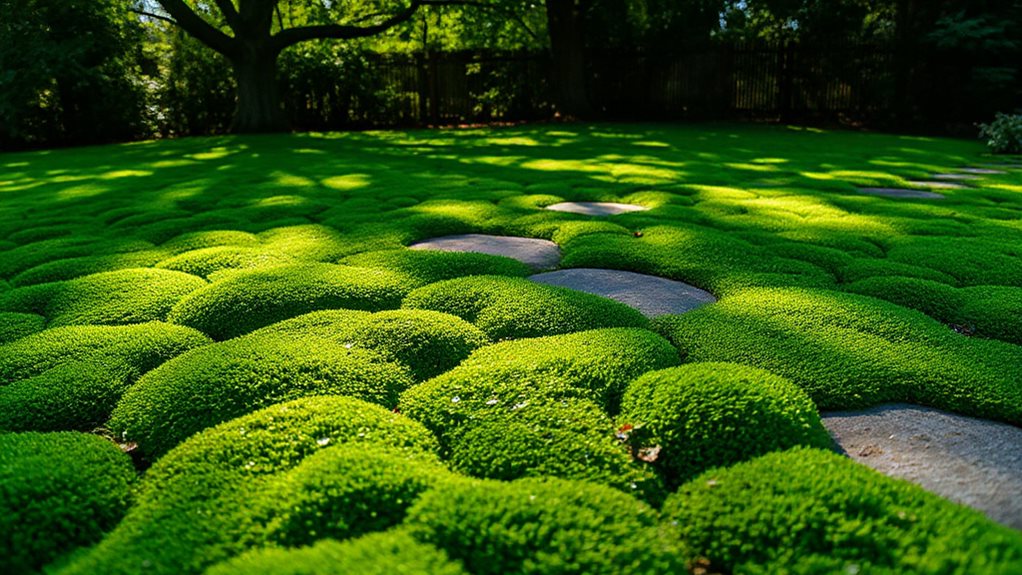
Often overlooked in traditional landscaping, lush moss makes an ideal ground cover for shady, low-traffic areas where grass struggles to grow.
You’ll appreciate its soft, springy texture and quiet resilience, thriving in deep shade with minimal care. It absorbs moisture through its leaves, stays green after rain, and supports local wildlife—all without mowing, fertilizing, or chemical treatments. Sedum Golden Moss is an excellent alternative for sun-exposed rock gardens and dry sites because it prefers well-drained soil, tolerates drought, and needs minimal maintenance.
Clover Lawns That Stay Green All Season
You’ll love how clover stays green all season with little effort, thanks to its deep roots that tap into soil moisture and reduce the need for watering.
It naturally fertilizes itself by fixing nitrogen, so you can skip synthetic fertilizers and still keep a healthy, lively lawn.
Clover also thrives in poor or compacted soils where grass struggles, making it a smart, low-maintenance choice for tough spots in your yard.
Drought-Resistant and Low-Maintenance
Thriving where traditional lawns struggle, clover offers a resilient, eco-friendly alternative that stays lush and green with minimal effort.
You’ll appreciate its drought resistance and low water needs, especially once established.
It tolerates poor soil, requires mowing only a few times a year, and naturally reseeds, reducing maintenance.
Clover handles foot traffic, resists pests, and thrives in zones 3–10 with little input.
Natural Fertilizer With Nitrogen Fixing
At the heart of a self-sustaining lawn lies a powerful natural process: nitrogen fixation. You can grow white clover to naturally convert atmospheric nitrogen into plant-usable forms, thanks to its symbiotic relationship with Rhizobia bacteria.
This means you’ll skip synthetic fertilizers, save money, and enjoy a consistently green, low-maintenance lawn that supports sustainable practices while feeding companion grasses steadily all season.
Thrives in Poor Soil Conditions
Even in the most challenging yard conditions, clover lawns prove remarkably resilient, adapting effortlessly to poor, compacted, or low-drainage soils often left behind after construction.
You’ll find it thrives without fertilizers, tolerates drought once established, and handles acidic to neutral pH levels.
Its deep roots access moisture others can’t, keeping your lawn green where grass fails, giving you reliable, low-effort success season after season.
Sedges: The Natural Lawn Substitute
Choosing sedges as a lawn alternative means embracing a smarter, more sustainable terrain—one that supports local ecosystems while slashing maintenance demands.
You’ll enjoy lush, turf-like ground cover with just 2–3 mows yearly, no fertilizers, and minimal watering.
Species like Pennsylvania and California meadow sedge thrive in sun or shade, suppress weeds, and welcome beneficial wildlife, making your yard a resilient, eco-friendly haven.
Maryland gardeners should note the state’s common Zone 7a classification when selecting sedge varieties suited to their local climate.
Xeriscaping for Water-Wise Landscapes
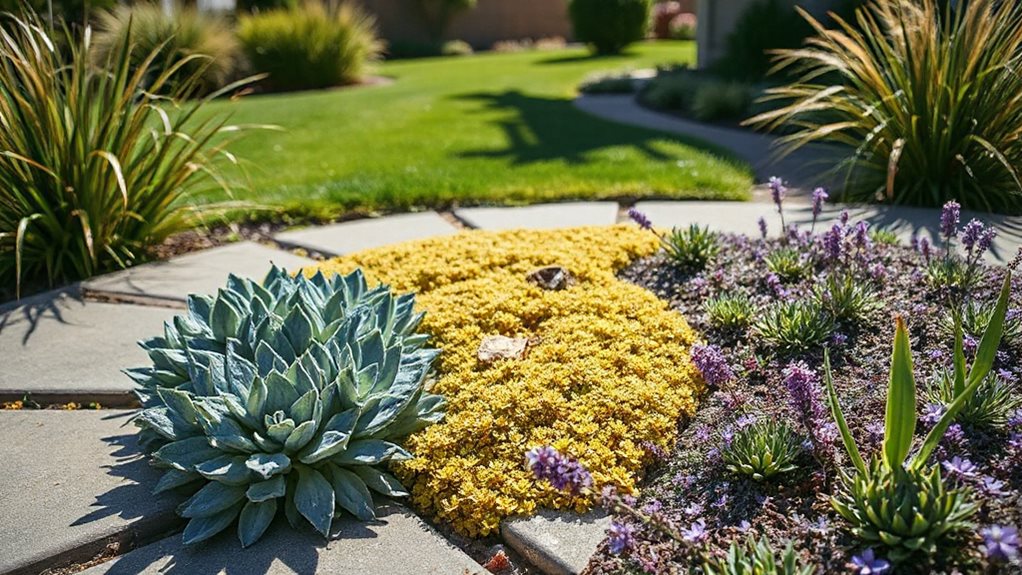
You can create a water-saving garden by designing with drought-tolerant plants that thrive in your local climate, reducing the need for supplemental watering.
Grouping plants with similar water needs, using efficient drip irrigation, and adding mulch helps conserve moisture while keeping your garden healthy.
With smart planning and the right plant choices, you’ll enjoy a lush, low-maintenance yard that uses up to 50% less water than a traditional lawn.
Include tropical, heat-loving species like Bougainvillea and Hibiscus for color while selecting drought-tolerant palms to minimize irrigation needs.
Water-Saving Landscape Design
While traditional lawns demand constant watering and upkeep, water-saving scenery design—commonly known as xeriscaping—offers a sustainable alternative that thrives with minimal irrigation. You’ll conserve water, cut bills, and support local ecosystems by choosing drought-tolerant plants, efficient irrigation, and smart grouping.
With mulch, permeable hardscaping, and organic soil, your yard becomes low-maintenance, eco-friendly, and resilient—all while belonging to a growing community of water-wise homeowners.
Drought-Tolerant Plant Choices
When planning a water-wise setting, selecting drought-tolerant plants is a decisive step toward long-term sustainability and reduced maintenance.
You can choose succulents like crocodile aloe or whale’s tongue agave, which store water efficiently. Native options such as echinacea, penstemon, and Sonoma sage thrive with minimal irrigation, while shrubs like pinyon pine and California sagebrush add structure and resilience to your xeriscaped gardenscape.
Hardscaping Solutions for Zero Maintenance
Hardscaping solutions offer a smart, long-term alternative to traditional lawns by combining durability with effortless upkeep. You’ll enjoy clean lines and lasting beauty with porcelain pavers, stone patios, or gravel paths that suppress weeds and reduce watering needs.
These low-maintenance features, built to last decades, fit seamlessly into your scenery while enhancing curb appeal and property value—all without mowing ever again.
Final Note
You’ve got better options than a traditional lawn, and they’re easier to maintain. Ornamental grasses, ground covers, moss, clover, sedges, xeriscaping, and hardscaping all reduce or eliminate mowing. These alternatives conserve water, thrive in diverse conditions, and offer lasting curb appeal. By choosing the right option for your soil, sun exposure, and foot traffic, you’ll save time and resources while creating a sustainable, attractive scene that suits your lifestyle and environmental goals.