Mow the lawn to about 2½ inches, clear debris, then lightly water the soil. Mix fine sand, peat‑moss, and topsoil (about 70 % sand, 30 % compost for loam; a 50/50 sand‑soil base with added compost for clay) and apply the first ¼‑inch layer over low spots, using a 36‑inch rake to spread it evenly. Lightly compact with a drag mat or stiff brush, water promptly to settle the material, and repeat in ¼‑½‑inch increments until the surface is uniform; aerate and overseed if you want faster recovery, and the next steps will show you how to maintain the level throughout the year.
TLDR
- Mow the lawn short, clear debris, and lightly water the soil to a workable moisture level.
- Apply a thin (¼‑½ in.) layer of sand‑soil mix to low spots, spreading with a rake and checking level with a board.
- Lightly compact each layer using a drag mat or stiff brush, then water gently to settle the material.
- Aerate before and after topdressing to improve oxygen flow and allow seed‑bed creation for overseeding.
- Repeat layering until the surface is uniform, maintaining consistent moisture until the grass re‑establishes.
Why Level a Bumpy Lawn Without Removing Grass
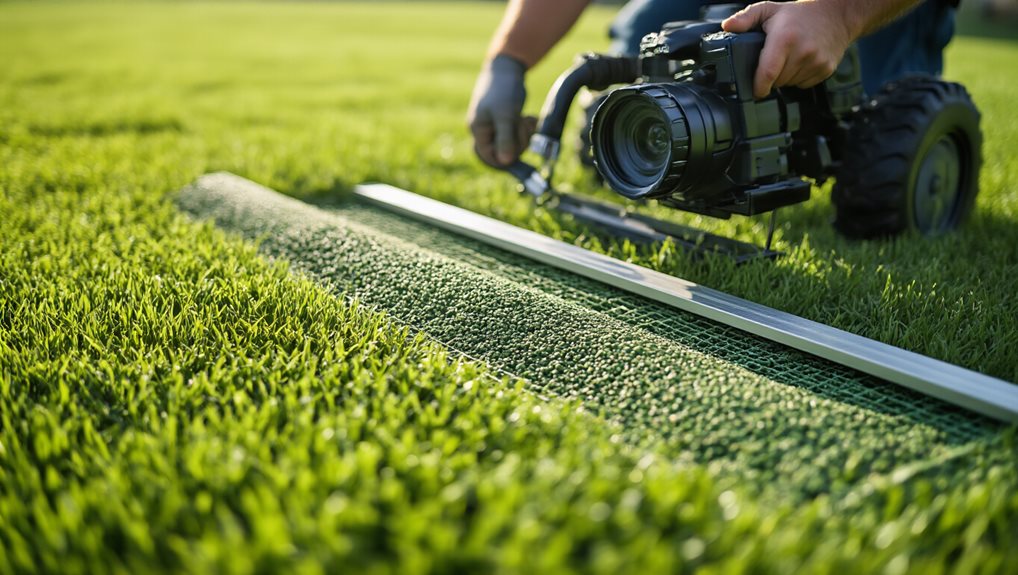
Why bother leveling a bumpy lawn without pulling up the grass? You’ll improve drainage, preventing soggy spots that breed mold and dry areas that stress roots, while topdressing enhances water absorption and nutrient distribution. Uniform terrain promotes healthier, darker grass, reduces pest and disease risk, and boosts carbon sequestration. A level surface also minimizes tripping hazards, eases mowing, and creates a visually appealing, cohesive yard that feels like shared, well‑kept space. Heavy foot traffic can compact soil unevenly, creating dips and ruts that hinder grass health. In addition, implementing slope management techniques such as proper grading and drainage can help direct water away from structures and reduce erosion, contributing to a more stable lawn overall. gradual slope assessment ensures you identify low spots and address drainage before they become problem areas.
Gather Essential Tools & Materials
After you’ve seen how leveling a bumpy lawn improves drainage, pest resistance, and visual appeal, the next step is to gather the tools and materials that will let you work efficiently and achieve a smooth surface without removing the grass. Bring a 36‑inch Landzie rake or a DIY metal version, fine sand, peat‑moss or topsoil mix, a wheelbarrow and shovel, plus a level, string, garden fork, and hard rake for accurate assessment and even distribution. phalaenopsis orchid
Prepare Your Lawn for Leveling
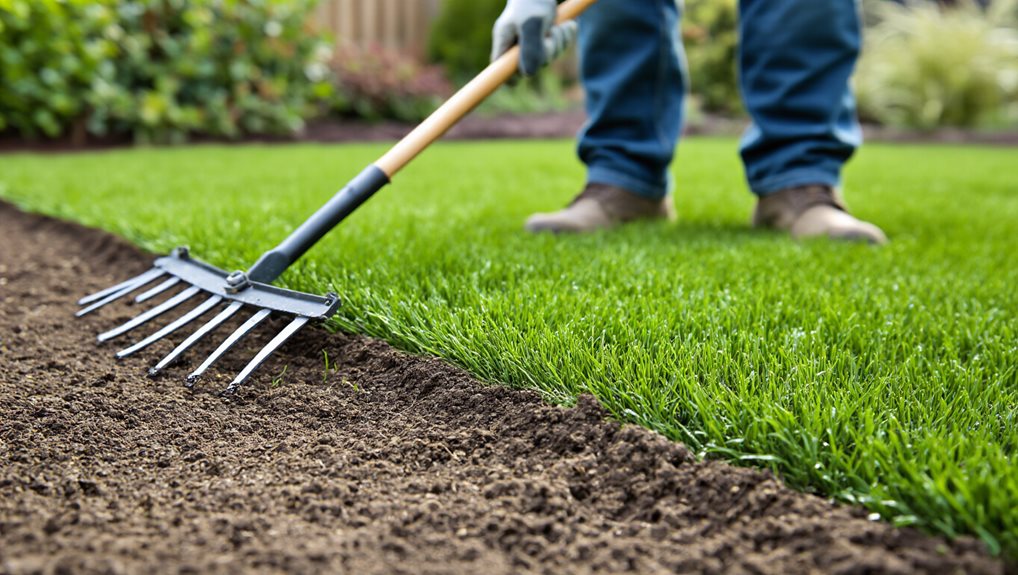
First, mow the grass short, keeping it about 2.5 inches to expose high and low spots while preventing stress.
Remove debris, thatch, and stones, then dethatch or aerate a week ahead to loosen compacted soil.
Mark uneven areas with a board or string line, and water the lawn thoroughly a couple of days before work to ensure the soil is moist but not muddy.
Regularly check water flow and temperature consistency during the leveling process to prevent uneven settling and ensure a stable surface over time. Temperature consistency
Select the Ideal Soil‑Sand‑Compost Mix
What mix you choose depends on your soil type, grass species, and desired nutrient uplift, and the right blend will both level the surface and support healthy growth. For sandy loam, blend 70% golf‑course sand with 30% compost; for clay, use a 50/50 sand‑soil base then add compost to reach 40‑60% organic matter. Thoroughly screen compost, then mix in a wheelbarrow until uniform, ensuring even coverage and micro‑be activity.
Apply the First Thin Layer to Level Your Lawn
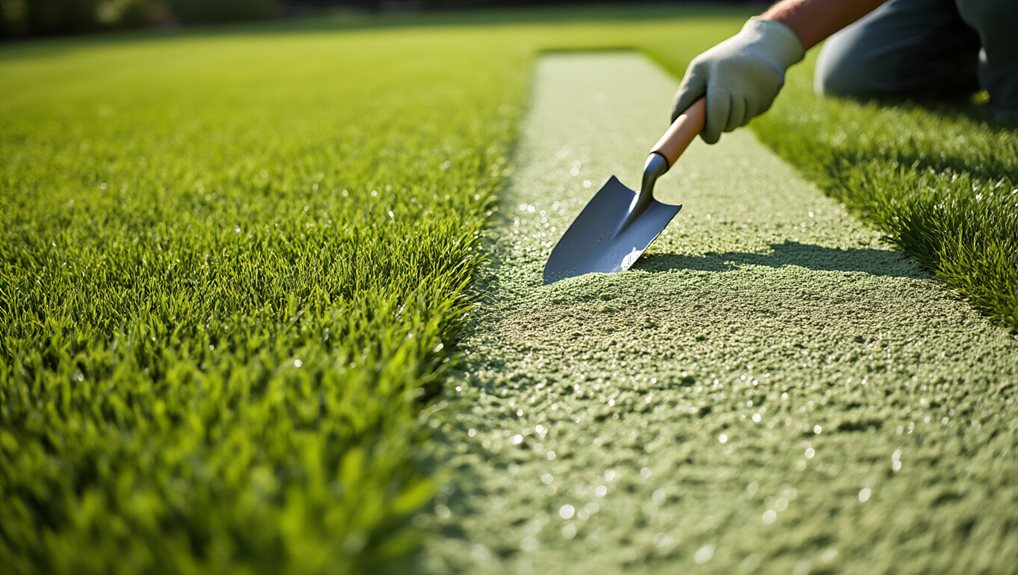
Your prepared sand‑soil‑compost blend now serves as the leveling medium, and the first step is to spread a thin, even coat over the entire lawn. Aim for a¼‑to‑inch‑inch layer, focusing on low spots deeper than two inches. Use a shovel to disperse the mix, then pull it with a bow rake, smoothing north‑to‑south and east‑to‑west, ensuring grass blades remain mostly visible.
Spread the Mix Without Smothering Grass
A thin, ¼‑to‑½‑inch coating of the sand‑soil‑compost blend will level low spots without choking the grass, so you’ll want to spread it in small, controlled increments rather than dumping a thick pile all at once. Incorporate organic matter like compost for well‑draining conditions soil preparation to support healthy growth as you relevel. Use a rake or leveling rake to drag the mix into depressions, shovel handfuls into tighter zones, and water promptly to settle the material while the grass continues to grow.
Lightly Compact the Fill to Keep the Lawn Level
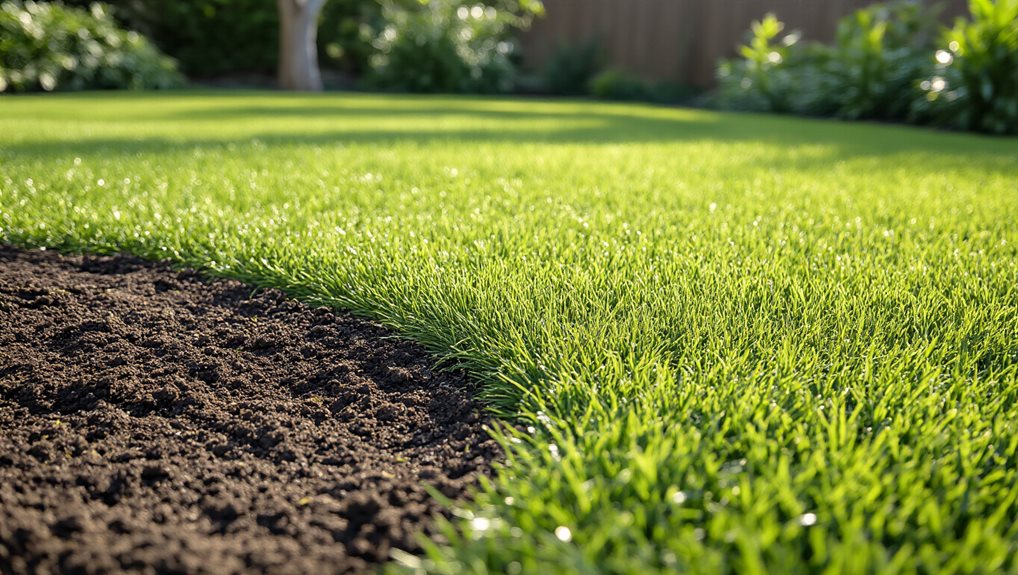
You’ll want to apply light compaction right after spreading the sand‑compost mix, using a drag mat or stiff brush to press the material into the soil without crushing the grass roots. After placement, monitor moisture and repeat light passes as needed to maintain a level surface and prevent uneven settling, ensuring you avoid compacting too aggressively. moisture management
Proper Compaction Techniques
How can you keep a freshly filled lawn level without crushing the grass? Lightly compact the fill using a water‑filled roller, pulling it in long, horizontal strips and adding water only if the surface resists.
Aerate before and after filling with a garden fork or spike aerator to integrate soil, then rake evenly. Keep pressure gentle, avoid over‑compaction, and watch the lawn settle uniformly.
Timing for Optimal Settling
After mastering proper compaction, you need to time the process so the lawn can settle uniformly. Aim for late spring or early summer when bermudagrass is actively growing, avoiding early spring dormancy; mow low to reveal dips, then lightly roll the screened topsoil.
This warm‑season window lets the fill compact without stress, ensuring smooth, lasting level as the grass thrives together.
Repeat the Layer‑by‑Layer Process to Level the Lawn
Where does the lawn still show low spots after the first layer settles, and how can you address them without stripping the grass? Identify puddles or runoff, then mix one part compost, two parts topsoil, two parts sand; spread ¼‑½ inch into divots, rake or broom for uniformity, tamp firmly, walk a roller over the area, and repeat up to three times, checking level each round.
Water After Each Application to Set the Level
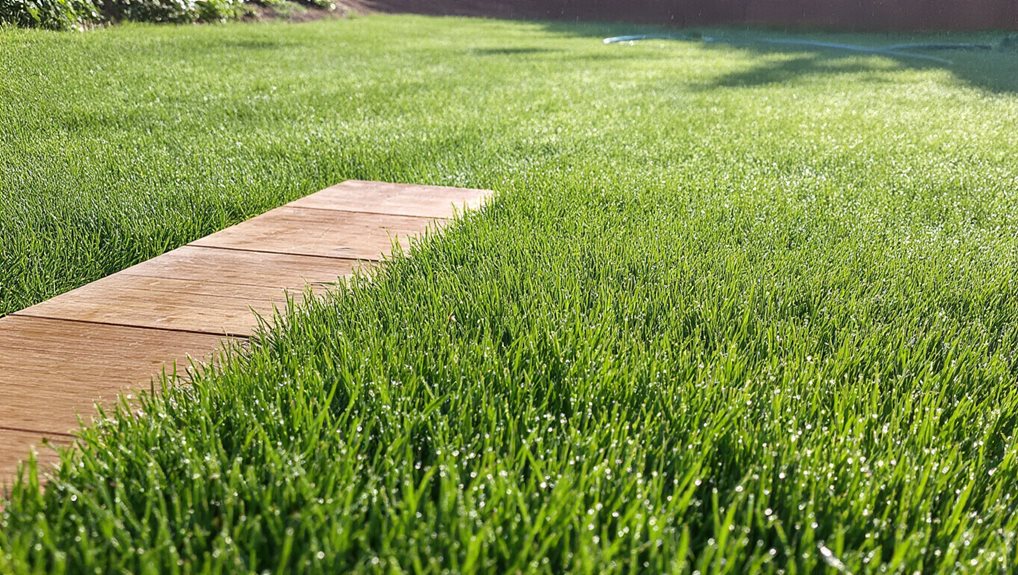
You should water the lawn right after you spread each topdressing layer, because the immediate moisture helps the mix settle into the grass and fill any air pockets.
Using a sprinkler or hose on a gentle setting gives a damp consistency without turning the soil into mud, which prevents drainage problems and new uneven spots.
This quick watering also starts nutrient infusion, encouraging roots to grow into the new material and promoting a smoother, healthier surface.
Watering Technique Timing
A well‑timed watering schedule is essential for locking the leveling mix in place and encouraging healthy root development after each application. Water before 10 a.m., aiming for a 6‑inch wetting depth, and check with a screwdriver; if it resists, water again.
Apply 1–1.5 inches weekly, split into short morning sessions, then taper to every other day as grass establishes, using timers to maintain even coverage.
Immediate Settling Benefits
After you’ve set the watering schedule to lock the mix in place, the next step is to water immediately after each application to accelerate settling. The water compacts the sand‑soil blend, driving it into low spots, reducing unevenness by up to 85 % within a month. It also softens the surface, lets you massage the mix with your feet, and preserves grass health by keeping tips exposed for sunlight and air.
Check Soil Settling Before Adding the Next Layer
Is the soil settling properly before you add another layer? You should wait 24‑48 hours after topdressing, then press a flat board into the surface; if it sinks evenly, the soil has compacted enough. Check for low spots by walking slowly, feeling for softness, and use a level to confirm uniformity. Only when the ground feels firm and level should you proceed.
Aerate & Overseed (Optional) to Strengthen the Levelled Lawn
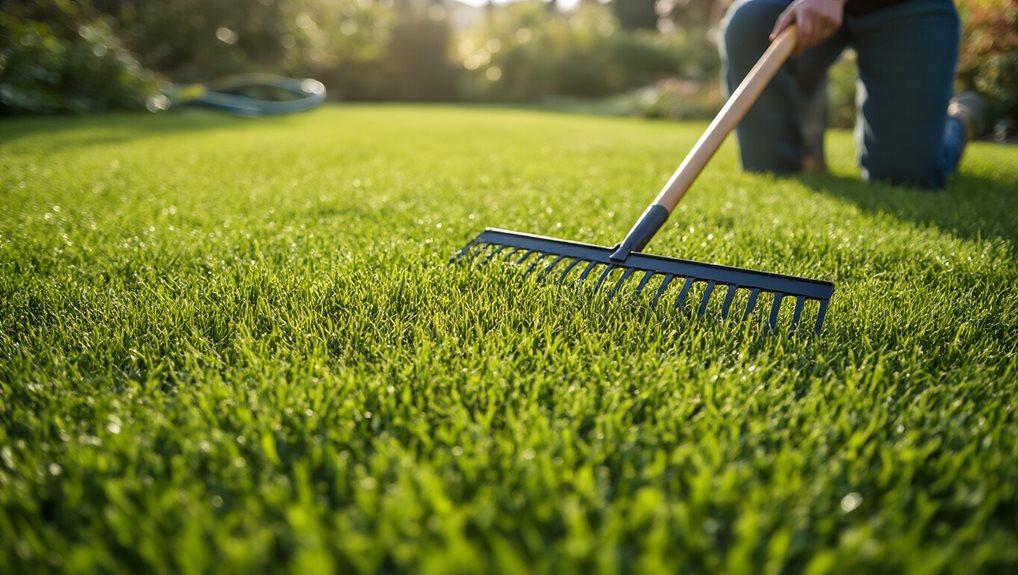
After you’ve leveled the soil, run an aerator to pull out cores and create openings that let air, water, and nutrients reach the roots.
Immediately overseed the lawn, letting the new seed fall into the fresh holes for optimal soil contact and faster germination.
Keep the area consistently moist, watering lightly but frequently until the new grass establishes and the levelled surface becomes dense and resilient.
Ate Soil for Aeration
Why bother with soil aeration after leveling a bumpy lawn? You need it because compacted soil blocks roots, water, and nutrients, creating puddles and thinning grass.
Core aeration punches holes, loosening thatch, improving drainage, and letting oxygen and nutrients reach deeper roots.
Double‑pass coverage ensures uniform decompaction, promoting stronger, drought‑resistant turf that unites your lawn into a healthier, cohesive whole.
Overseed Immediately After Aerating
Core aeration opens a network of uniformly spaced holes that act as ready‑made seed‑beds, so planting immediately afterward lets the seed settle into those cradles and stay protected from wind, birds, and runoff. You’ll notice seedlings filling bare spots, creating a denser, uniform turf that crowds out weeds, improves root depth, and enhances resilience, while the soil’s enhanced structure promotes quicker germination and stronger, healthier grass.
Maintain Moisture for New Grass
How can you keep newly seeded grass hydrated long enough to establish strong roots? Aerate the soil to loosen compaction, allowing water to infiltrate three times faster and reducing runoff, then lightly overseed if desired.
Keep the surface consistently moist—mist lightly each morning and evening, avoiding puddles—so seedlings access steady moisture, develop deeper roots, and benefit from enhanced nutrient uptake, promoting a resilient, thriving lawn.
Year‑Round Maintenance for a Level, Healthy Lawn

When you keep a lawn level and healthy all year, the key is to match maintenance tasks to each season’s climate and growth cycle.
In winter, turn off irrigation, mow sparingly, and check for leaks; in spring, reactivate sprinklers, water half‑inch per zone, fertilize, and begin regular mowing.
Summer demands deep, infrequent watering, higher cuts, and weed monitoring.
Fall calls for fertilizing, aerating, overseeding, debris removal, and winterizing irrigation.
Throughout, assess soil health, use precision watering, and apply organic nutrients for resilience.
Final Note
By following these steps you’ll achieve a smooth, resilient lawn without stripping away existing grass, ensuring the surface remains even, drainage improves, and the turf stays healthy. Consistently applying thin, properly mixed soil‑sand‑compost layers, watering to settle each coat, and monitoring for compaction will prevent future bumps. Optional aeration and overseeding further strengthen the root zone, while routine maintenance—mowing, fertilizing, and periodic top‑dressing—keeps the lawn level and thriving year‑round.