To drill into brick walls, you’ll need a hammer drill with tungsten carbide masonry bits and appropriate anchors for your load requirements. Mark your drilling spot clearly, avoiding brick edges by at least an inch, then create a small pilot hole at low speed to prevent cracking. Choose brick over mortar for heavier items, position your drill perpendicular to the wall, and apply gradual pressure while drilling. Follow these fundamentals to investigate advanced techniques for professional results.
TLDR
- Use a hammer drill with tungsten carbide masonry bits for superior power and control when drilling into brick walls.
- Mark the drilling spot clearly and create a small pilot hole at low speed to prevent bit slippage and cracking.
- Choose brick over mortar for heavy items (over two pounds) due to better load-bearing capacity and structural support.
- Position the drill perpendicular to the wall and apply gradual pressure to avoid glazing and minimize surface cracking.
- Select metal anchors over plastic ones and ensure proper expansion by hammering securely before final tightening with wrench.
Essential Tools and Equipment for Brick Drilling
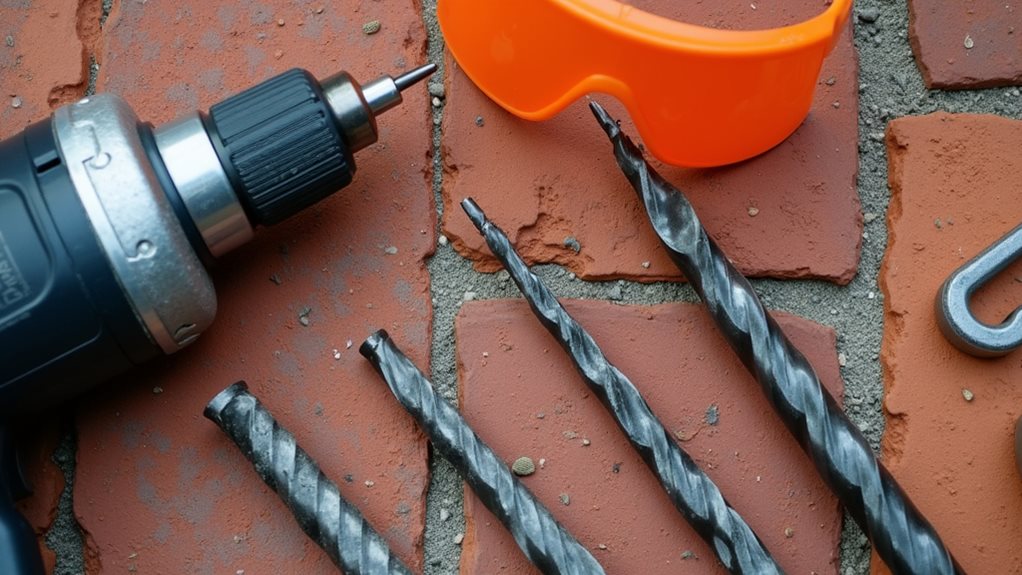
Successfully drilling into brick walls requires the right combination of tools, equipment, and safety gear to achieve clean, precise holes without damaging the masonry or compromising your safety.
You’ll need a hammer drill with masonry bits featuring tungsten carbide tips, appropriate anchors matching your load requirements, safety glasses, and a dust mask for protection. Corded drills often provide superior power and control compared to cordless models when tackling heavy-duty masonry drilling projects. You should also identify any concealed services like water pipes or electrical conduits before drilling by using a wall scanner to avoid accidental damage.
Preparing and Marking Your Drilling Location
Before you pick up your drill, taking time to properly prepare and mark your drilling location will make the difference between a professional-looking installation and a costly mistake that damages your brick wall.
Use a pencil or marker to clearly mark your intended spot, then create a slight depression with an awl to prevent bit slippage. Keep your marks more than an inch from any brick edges to prevent splitting and crumbling during the drilling process. Begin with a small pilot hole at low speed to reduce glazing and minimize the risk of cracking.
Selecting the Right Drilling Target: Brick vs. Mortar
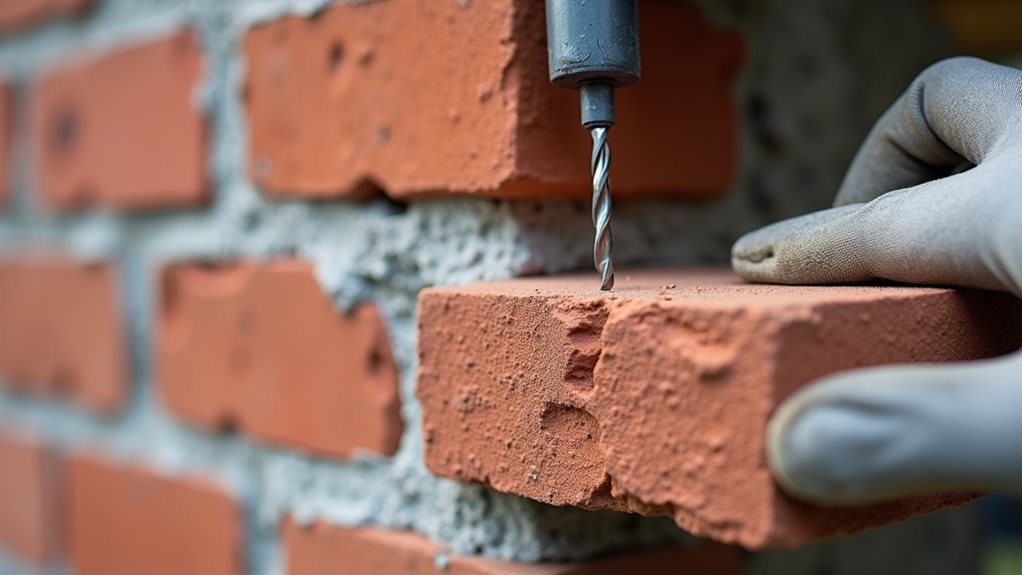
When choosing between drilling into brick or mortar, you’ll need to weigh several critical factors that directly impact your project’s success and longevity.
For items over two pounds, brick’s superior load-bearing capacity makes it the preferred choice. However, mortar offers easier drilling and simpler repairs if mistakes occur, making it suitable for lighter installations. Waiting 48–72 hours after related masonry work can help ensure proper curing before adding loads to anchors curing time.
Step-by-Step Drilling Technique
Once you’ve determined whether to drill into brick or mortar based on your project’s weight requirements, proper execution of the drilling technique becomes your next priority.
Position your hammer drill perpendicular to the wall surface, then palm-tap the drill’s back to center the bit on your marked location. Squeeze the trigger slowly with gradual pressure, allowing the bit to penetrate the surface.
Installing Anchors and Final Setup
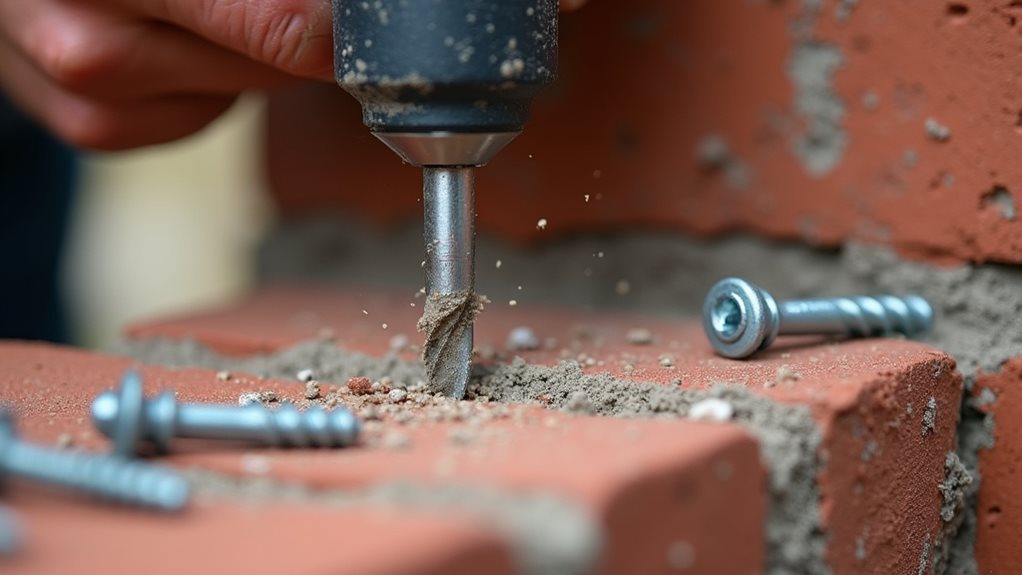
After completing your pilot hole, you’ll need to select the appropriate anchor type based on your project’s weight requirements and the specific characteristics of your brick wall.
Metal anchors outperform plastic ones for most applications.
Insert your chosen anchor into the drilled hole, hammer it securely in place, then tighten with a wrench to complete expansion and make certain proper fastening.
Final Note
You’ve now mastered the fundamentals of drilling into brick walls safely and effectively. Remember to always wear protective equipment, choose the correct drill bit for your specific brick type, and work at a steady pace to prevent overheating. Whether you’re mounting shelves, installing fixtures, or hanging artwork, these techniques will guarantee secure, professional results. Take your time with each step, and don’t rush the process for best outcomes.