Scarify your lawn by mowing low, raking the clippings, then using a spring‑tine rake or electric scarifier to expose moss and thatch, which lets air, water, and nutrients reach the roots; improve drainage by testing soil moisture, amending heavy clay with compost or gypsum, and installing French drains or grading slopes; apply an iron‑based moss killer according to label directions, avoiding freshly seeded or aerated areas, and consider DIY mixes like baking‑soda‑water or vinegar‑soap solutions for spot treatment; finally, choose shade‑tolerant grasses such as fine fescue, prune overhanging branches, and overseed bare patches to boost turf density, and you’ll discover more detailed steps if you keep exploring.
TLDR
- Scarify the lawn with a spring‑tine rake to remove moss and thatch, then rake up debris for disposal.
- Aerate compacted soil and improve drainage; add compost or gypsum to clay to reduce moisture that favors moss.
- Apply an iron‑based moss killer (e.g., ferrous sulfate) according to label, avoiding freshly seeded or aerated areas.
- Use DIY treatments such as a baking‑soda and water solution with a dash of castile soap, or a vinegar spray, and re‑scarify to lift dead material.
- Plant shade‑tolerant grasses like fine fescue in low‑sun areas and prune overhanging branches to increase sunlight and air flow.
Scarify Your Lawn for Moss Removal
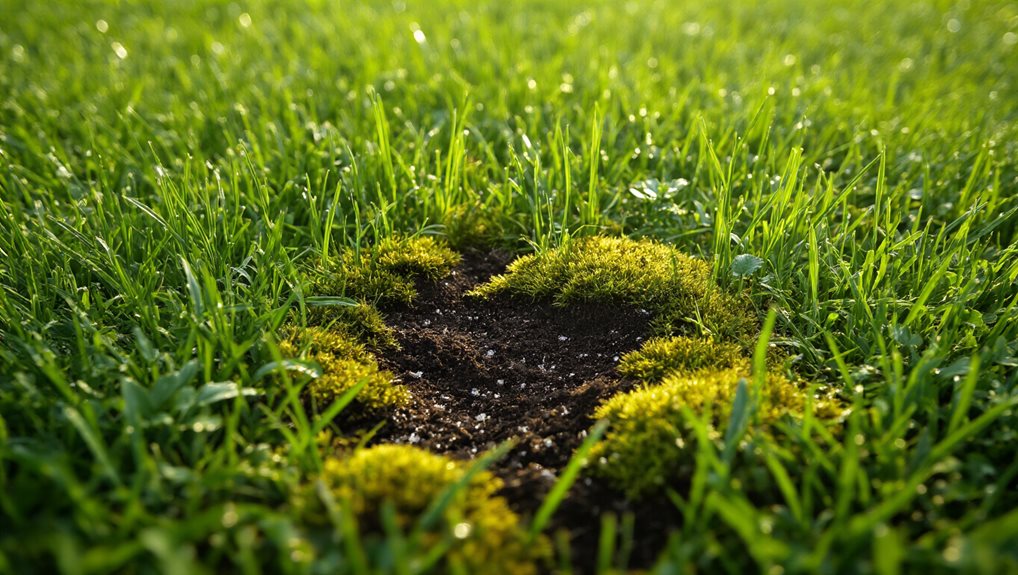
Why scarify your lawn before tackling moss? You’ll expose hidden moss and thatch, letting air, water, and nutrients reach roots, which strengthens community belonging as your lawn thrives. Mow low, collect clippings, then choose a spring‑tine rake for small yards, an electric scarifier for medium spaces, or rent a petrol scarifier for larger lawns. Lightly set blades, work in multiple directions, and rake gently to pile debris for easy disposal. Compacted soil limits nutrients to roots, encouraging moss growth. Seed and overseed as needed to repair bare patches and improve turf density soil aeration.
Apply Iron‑Based Moss Killers for Fast Removal
Iron-based moss killers work quickly, but they also help strengthen turf health when used as directed. In addition to the application, avoid applying on freshly seeded or recently aerated soil to give roots time to recover. full sun and heat
Mix DIY Natural Moss Removal Remedies
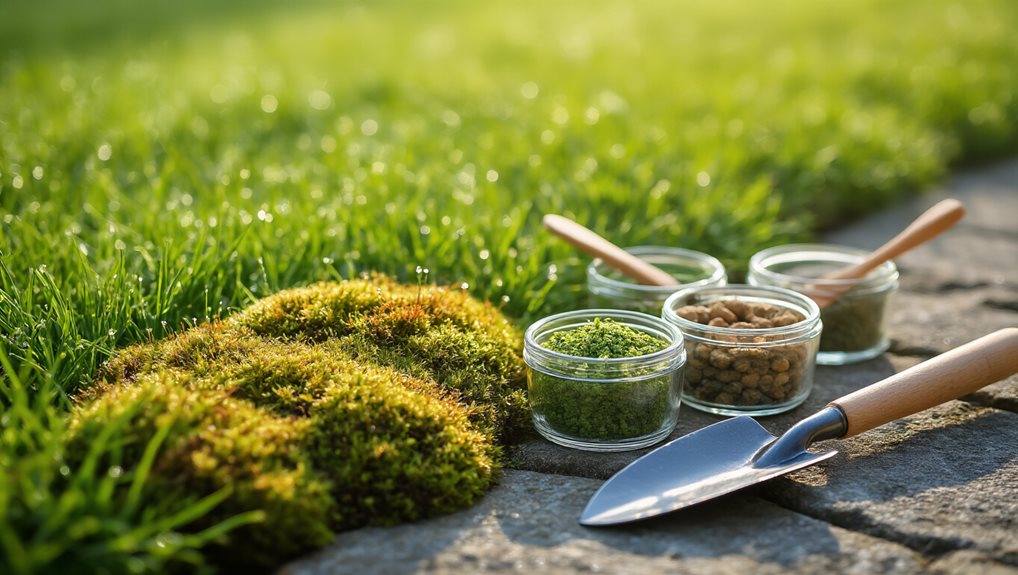
What if you could tackle moss with ingredients you already have at home, while keeping your lawn’s health intact? Mix a gallon of water with a pound of baking soda, shake in a sprayer, and coat moss; add a tablespoon of baking soda, two tablespoons of canola oil, and a dash of castile soap for extra adhesion.
Use dish‑soap solution (five ounces per gallon) or vinegar spray (one tablespoon per gallon) for spot treatment, and scarify with a spring‑tined rake after applications to lift dead material.
Baking soda-based moss treatment leverages the same concept of using lightweight, protective coverings in a garden context to shield your grass while tackling moss growth. row cover provides a broader category of garden management that can include frost protection, pest control, and growth enhancement, and its insulation-focused variants can influence underlying temperatures, which parallels how certain treatments aim to optimize lawn health under challenging conditions.
DIRECTIONS:
Improve Drainage and Soil Health to Prevent Moss Return
Ever noticed that moss thrives in damp, poorly drained spots, and wondered how to stop it from returning?
Test drainage by digging a 12‑inch trench or hole, watch water lag—slow drainage signals compaction, fast drainage suggests sand.
Amend clay with compost or gypsum, install French drains or grading slopes, and use permeable pavers to guide runoff, ensuring a healthier, drier lawn.
Select Shade‑Tolerant Grass and Prune Lawns to Prevent Moss
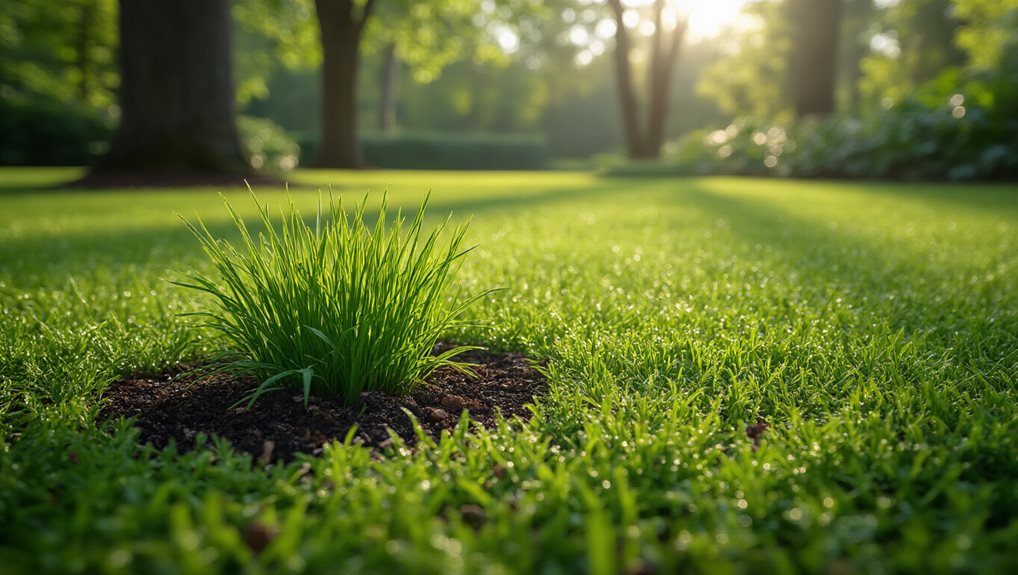
Why does moss keep taking over the shadier parts of your lawn? You can fight it by planting fine fescue or tall fescue in zones getting less than four hours of sun, because these cool‑season grasses thrive where light is limited and outcompete moss. Prune overhanging branches or remove excess canopy to enhance photosynthesis, and schedule seeding in late summer or early fall for optimal establishment. Mulching and spacing practices help conserve soil moisture and reduce evaporation in shaded areas, supporting healthier turf growth under limited light. Mulching and spacing
Final Note
By scarifying, applying iron‑based killers, using DIY natural remedies, improving drainage, and choosing shade‑tolerant grass, you’ll keep moss at bay while maintaining a healthy lawn. These steps work together: aeration removes moss‑friendly that, iron accelerates removal, natural mixes offer eco‑friendly alternatives, proper drainage prevents moisture buildup, and suitable grass reduces shade‑induced moss growth. Consistently applying this regimen will sustain a vibrant, moss‑free lawn for years.