You keep your soil healthy and garden productive by rotating crops each season. Swap plant families every year to prevent nutrient loss, reduce pests, and avoid disease buildup. Legumes like beans fix nitrogen, helping heavy feeders like tomatoes thrive later. Plan with simple bed maps, group plants by family, and use cover crops to improve the soil. Stick to a rotation cycle, and you’ll see stronger growth, fewer problems, and better harvests over time—there’s a smart system behind the success you can start using right away.
TLDR
- Rotate crops yearly to prevent soil nutrient loss and reduce pests naturally.
- Plant nitrogen-fixing legumes like beans to enrich soil for future crops.
- Avoid growing the same plant family in the same spot for 3–4 years.
- Use simple bed maps or labels to track crop locations and plan rotations.
- Alternate heavy feeders with cover crops to maintain soil health and fertility.
What Is Crop Rotation and Why It Matters?
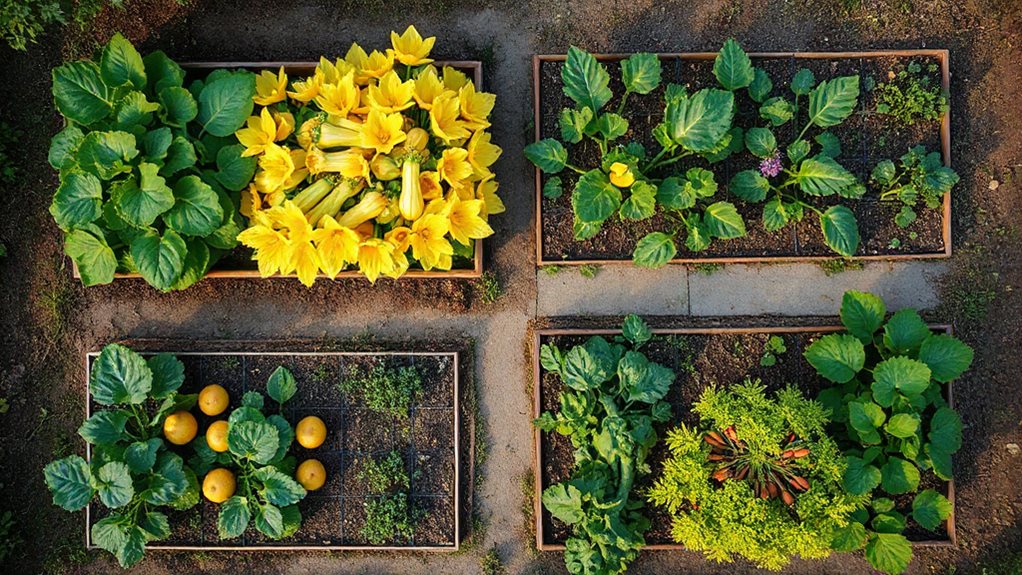
While you might be tempted to plant the same vegetables in the same spot year after year, doing so sets the stage for problems that crop rotation can prevent.
You’ll increase yields, reduce pests, and improve soil by rotating crops like legumes and cereals every few years. This smart practice keeps your garden healthy, sustainable, and productive over time. Incorporating nitrogen-fixing legumes in rotations helps replenish soil nutrients naturally. Plots grown with the same crop for 5 years or more are no longer considered part of arable land under standard agricultural classification.
How Crop Rotation Naturally Boosts Soil Health
You keep your soil healthier by rotating crops, because diverse plants balance nutrients and prevent depletion over time.
When you disrupt pest and disease cycles naturally, you reduce buildup of harmful organisms that target specific plant families.
This simple shift supports stronger, more resilient garden ecosystems without relying on chemicals.
Lab testing of soil nutrients can guide rotation planning by revealing current nutrient levels and deficiencies.
Nutrient Balance Through Diversity
Because healthy soil depends on more than just adding nutrients, rotating crops with diverse root structures and nutritional needs naturally improves soil fertility and structure over time.
You enhance nitrogen levels by including legumes like peas, which fix nutrients, while alternating heavy feeders with light users balances mineral demands.
This smart diversity reduces fertilizer use, enhances microbial activity, and sustains long-term garden productivity.
Pest Cycles Disrupted Naturally
When you rotate crops, you break the cycle that pests rely on to survive and multiply. By changing plant families, you starve pests of their host, reducing larvae and adult survival.
Non-host plants disrupt reproduction, while cover crops limit overwintering sites. This natural disruption, combined with healthier soil, makes your garden less inviting to pests, giving you better harvests with less struggle.
Know These Plant Families for Effective Crop Rotation
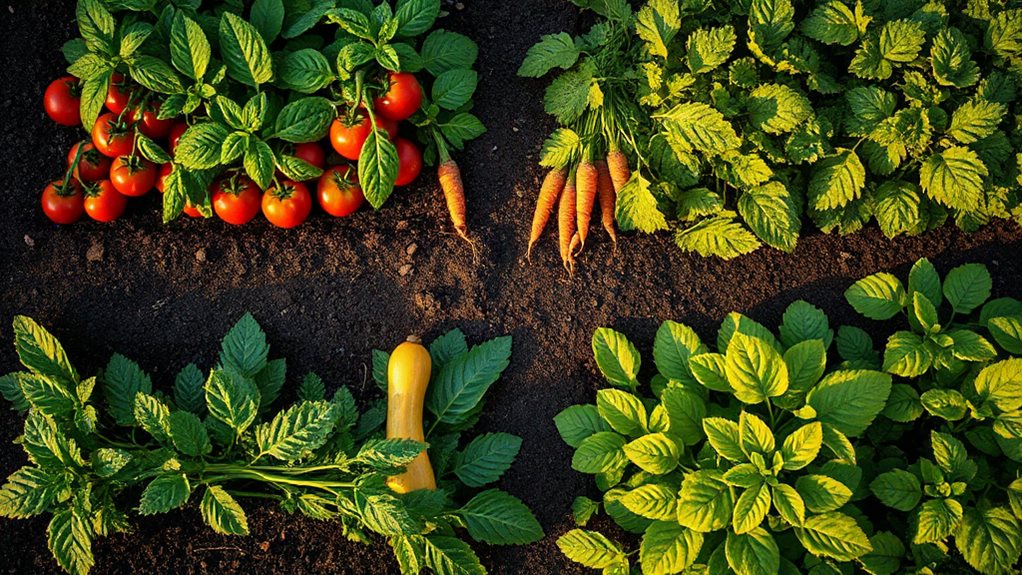
You’ll get the best results by grouping your crops into plant families, since they share nutrient needs and common pests.
Focus on key families like Nightshade, Brassica, Legume, Allium, and Leaf/Roots to plan smarter rotations.
Rotating these groups every few years keeps your soil balanced and your plants healthier.
Dual-chamber tumblers and large expandable bins can help you manage the increased compost production that results from effective crop rotation.
Key Plant Families
While planning your garden’s layout, recognizing the key plant families is essential for maintaining soil health and minimizing disease buildup over time.
You’ll rotate heavy-feeding brassicas like broccoli and cabbage first, followed by nitrogen-fixing legumes such as beans and peas.
Include beets and spinach, which are light feeders, then rotate in sunflower family crops like lettuce.
Finally, grow nightshades—tomatoes, peppers, and potatoes—while avoiding replanting any family in the same spot for at least three to four years to preserve soil balance and reduce pest pressure.
Group By Family
Because successful crop rotation hinges on understanding botanical relationships, grouping your vegetables by plant family is a crucial step in maintaining a healthy, productive garden.
You’ll rotate families like Nightshades—tomatoes, peppers, and eggplants—away from prior spots to prevent disease.
Cluster crops such as legumes, brassicas, and beets together, ensuring each group moves as a unit, preserving soil balance and reducing pests naturally over time.
What Happens If You Don’t Rotate Crops?
When the same crops grow in the same spot year after year, the soil begins to pay the price—nutrients get stripped away faster than they can be replenished, especially when heavy feeders like corn or broccoli dominate the plot.
You also risk disease buildup, pest infestations, lower yields, and environmental harm, since pathogens and insects thrive in monocultures, while synthetic fertilizers pollute watersheds and degrade soil health over time.
Soil tests can reveal nutrient imbalances and optimal pH ranges that guide corrective actions.
Map Your Crop Rotation in 4 Practical Steps
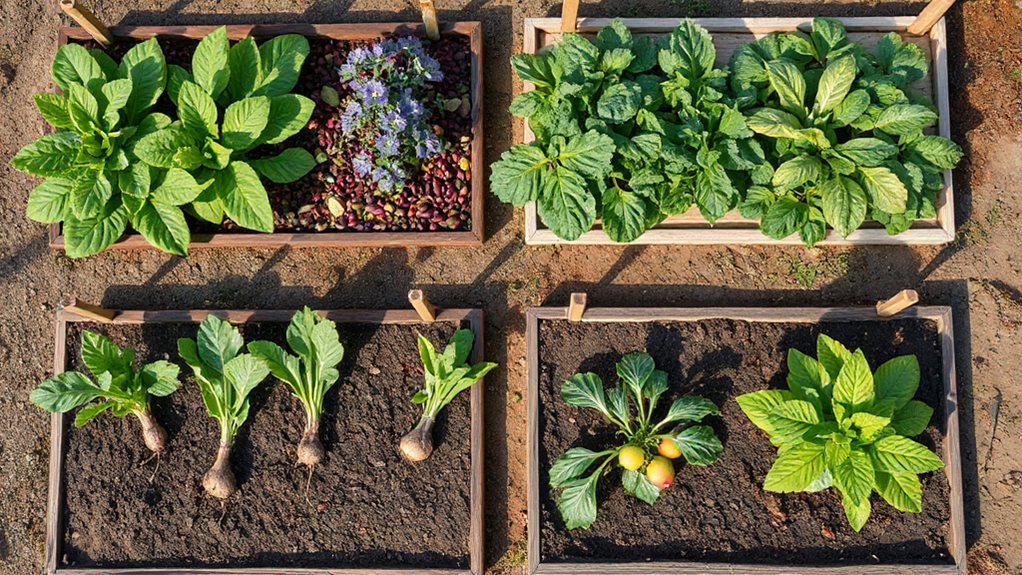
Get started by sketching out your garden layout on paper or in a digital planner, using a simple grid to map where each crop will go.
Group plants by family—like legumes, roots, fruits, and leaves—and rotate them yearly in a four-square design.
Track rotations with a journal or app, test soil annually, and use companion planting to enhance health, ensuring your garden thrives sustainably for years. Water is essential for photosynthesis and nutrient transport, so monitor soil moisture to prevent both drought stress and root rot.
Try These Proven Crop Rotation Sequences
Now that you’ve mapped out your garden layout and organized crops by family, it’s time to put those plans into action with proven rotation sequences that enhance soil fertility and reduce pests.
Start with tomatoes, then follow with peas to restore nitrogen. Rotate in cabbage, sweet corn, and potatoes. Use the four-family pie divide: nightshades, legumes, mustards, and grasses. Alternate heavy feeders with nitrogen-fixers, then add root crops and leafy greens to suppress weeds and balance nutrients.
Rotate Crops in Small or Raised Beds Easily
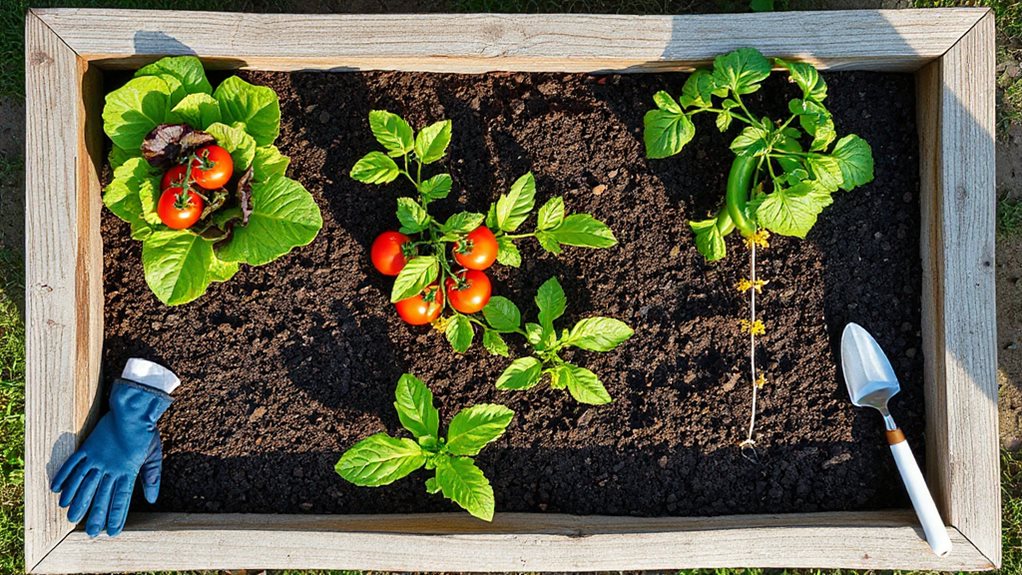
Breaking up your raised bed into manageable sections sets the stage for effective crop rotation, even in tight spaces.
Divide your 8×4 bed into four 4×2 mini beds, rotate plant families yearly, and use mulch to reduce disease spread.
Plan with sketches and charts, group crops by type, and track movements annually.
This simple system maintains soil health, minimizes pests, and increases yields—all within a small footprint.
Use Cover Crops to Supercharge Your Rotation
Building on your crop rotation plan, adding cover crops takes your garden’s productivity to the next level by actively improving soil health and reducing pest pressure.
You’ll increase organic matter, prevent erosion, and suppress weeds with choices like clover, rye, or mustard.
These plants enhance soil biology, fix nitrogen, and break pest cycles—all while fitting easily into small spaces and home-scale rotations.
Track and Improve Your Crop Rotation
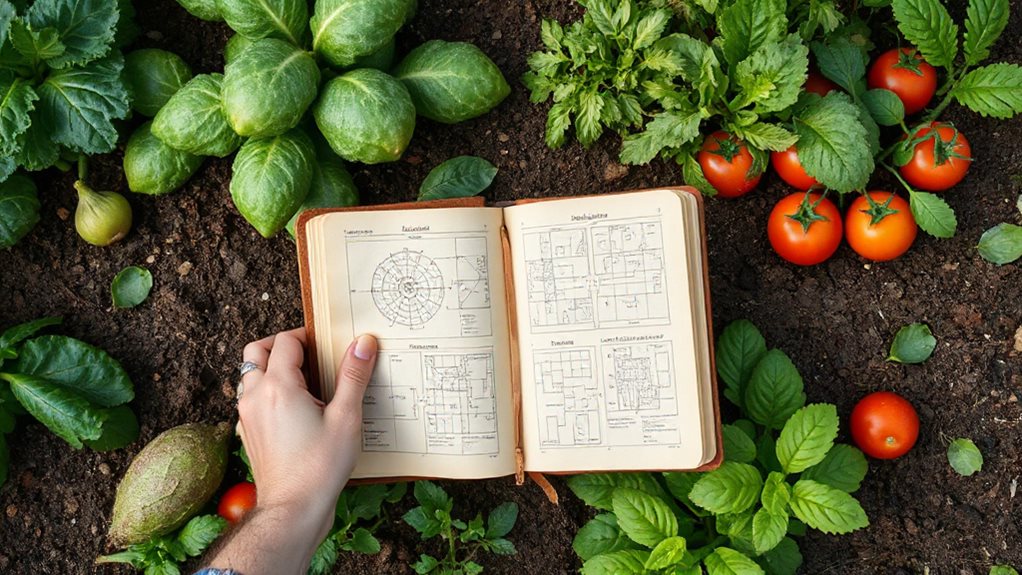
Regularly tracking your crop rotation not only strengthens your garden’s long-term health but also sharpens your planning for future seasons. Keep a garden log with maps and notes to record plant families, sun patterns, and yields.
Use simple bed labels like A, B, C to rotate crops yearly, avoid repeating families, and balance soil nutrients. Save annual layouts to follow 3- to 4-year cycles, and watch your garden thrive with fewer pests and healthier plants.
Final Note
You now have the tools to rotate crops effectively, even in small spaces. By understanding plant families and planning your garden layout, you’ll protect soil health, reduce pests, and increase yields naturally. Using cover crops and tracking your rotations guarantees long-term success. With consistent practice, crop rotation becomes a simple, rewarding habit that keeps your garden productive season after season—no guesswork needed, just smarter growing.