Choose sun‑loving succulents like Sedum or Dymondia for dense, drought‑tolerant mats, and opt for high‑traffic heroes such as Liriope or white clover when foot traffic is heavy; aromatic herbs—creeping thyme, Roman chamomile, oregano—add fragrance and culinary value while staying low‑maintenance, and shade‑tolerant species like Iris cristata, Phlox stolonifera, or blue‑eyed grass thrive under trees, with mosses (Scotch or Irish) covering moist, low‑light spots. Adjust watering and pruning to soil type and climate, and you’ll achieve a lush, weed‑free lawn replacement; the next section explains how to install and maintain these selections.
TLDR
- Choose drought‑tolerant, evergreen mats like Sedum, Dymondia, or Liriope for full‑sun areas to replace grass with low‑maintenance, dense cover.
- Use shade‑tolerant species such as bearberry, sweet woodruff, or mosses (Scotch or Irish) for partially or fully shaded zones.
- Incorporate aromatic, edible groundcovers like creeping thyme, Roman chamomile, or oregano for fragrance, culinary use, and natural pest deterrence.
- Select traffic‑resistant options such as white clover or Liriope in pathways and high‑traffic areas; they recover quickly and suppress weeds.
- Follow deep weekly watering (1 inch for well‑drained soil, 2 inch split for sand) and prune lightly after flowering to maintain compact, healthy mats.
Best Ground‑Cover for Each Sunlight Level
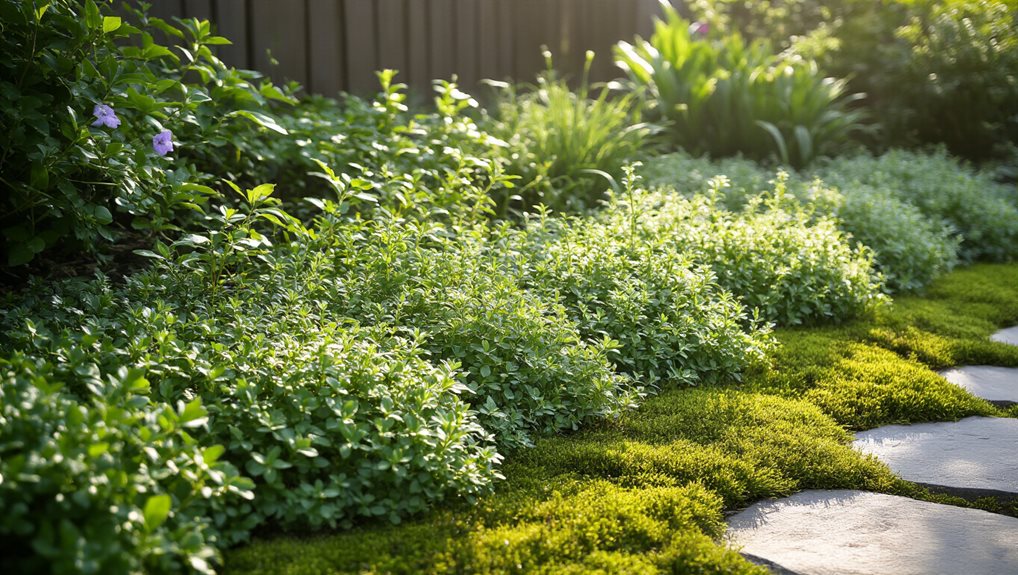
Ever wondering which ground‑cover thrives under a specific amount of sunlight? In full sun, choose yellow creeping Jenny for dense golden mats, or creeping Oregon grape for evergreen foliage and seasonal fruit. Bugleweed spreads quickly and can be difficult to eradicate once established. Partial shade welcomes coral bells with colorful foliage, while dry shade suits bearberry’s resilient evergreen leaves. Full shade benefits sweet woodruff’s weed‑suppressing habit, and dry shade also supports Allegheny pachysandra’s rhizomatous spread. Choose wisely for a cohesive, low‑maintenance landscape.
Sun‑Loving Succulents: Sedum & Dymondia
You’ll find that Sedum and Dymondia create a dense, evergreen mat that stays green under full sun while requiring almost no watering after they’re established.
Their drought‑tolerant foliage stores moisture, so they survive heat waves and reduce irrigation costs, making them ideal for low‑maintenance yards.
Because they spread quickly, they suppress weeds, stabilize soil on slopes, and provide a uniform, resilient ground cover that looks tidy year‑round.
Native plant advantage supports these ground covers by attracting and sustaining beneficial insects that contribute to a balanced garden ecosystem.
rought‑Tolerant Beauty
Why choose drought‑tolerant succulents for a sunny yard? Sedum and Dymondia thrive under full sun, needing no extra water after establishment, while their low, mounding habits replace grass with vibrant, evergreen mats. Their heat‑resistant foliage, modest height, and easy propagation from cuttings make them perfect for pathways, rock gardens, and spaces between pavers, offering lasting, low‑maintenance beauty.
Dense Evergreen Mat
Can you envision a carpet of silver‑gray foliage that stays green year‑round, tolerates scorching sun, and still weeds without fertilizer? You’ll love the dense evergreen mat formed by Sedum and Dymondia, which spreads 1‑2 feet, stays 1‑2 inches tall, and produces tiny yellow blooms in summer.
Their deep taproots grip soil, suppress weeds, and endure foot traffic, while thriving in full sun, poor, well‑drained soils, and drought conditions after establishment.
Low‑Maintenance Footprint
A single row of sun‑loving succulents can turn a barren patch into a low‑maintenance carpet, and Sedum and Dymondia are the ideal partners for this purpose. You’ll appreciate their dense, drought‑tolerant mats that thrive in six‑plus hours of sun, need only occasional watering, and survive zones 8‑11 with minimal pruning. Their hardy, pest‑resistant nature lets you create a welcoming, low‑effort landscape that feels part of your home.
High‑Traffic Heroes: Liriope & White Clover
Ever you’re looking for a low‑maintenance, resilient alternative to traditional turf that can still handle occasional foot traffic, Liriope and white clover each bring distinct strengths to the table. Liriope forms dense evergreen mats, tolerates drought, frost, and shade, and recovers quickly from light footfall, while white clover endures heavier traffic, fixes nitrogen, suppresses weeds, and thrives in poor, compacted soils, delivering a durable, low‑maintenance lawn. Outdoor space guidelines then help ensure these alternatives stay healthy under varying yard use.
Aromatic Herbaceous Mats: Creeping Thyme, Chamomile, Oregano
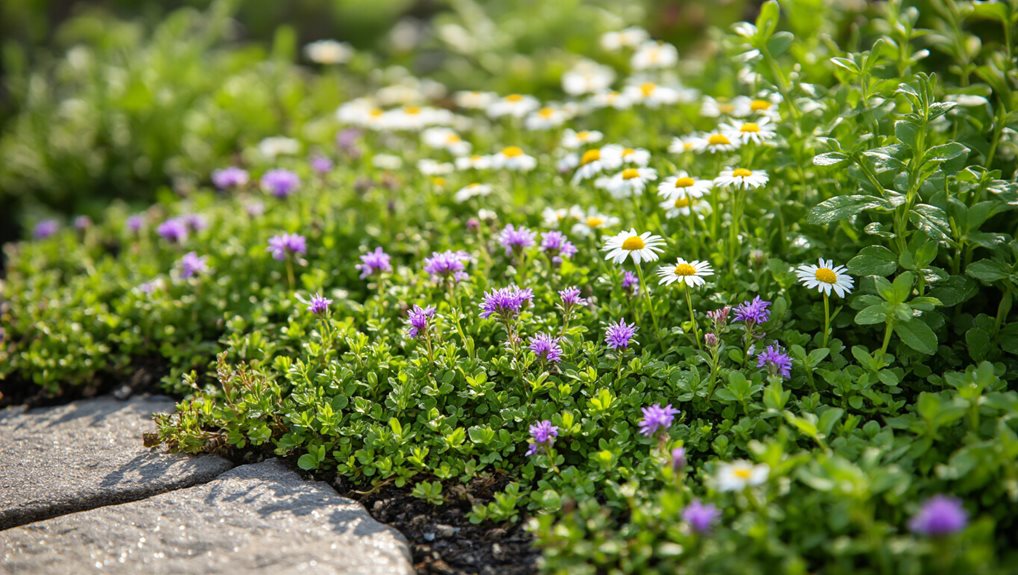
You’ll find that aromatic herbaceous mats like creeping thyme, Roman chamomile, and oregano give you fragrant, low‑maintenance ground cover that stays green in dry weather while needing only occasional watering after establishment.
Their edible foliage not only adds culinary and medicinal value, but its strong scent naturally repels pests and attracts pollinators, creating a lively ecosystem beneath your feet.
Plant them a few inches apart in well‑drained soil, trim as needed, and you’ll enjoy a resilient, sensory‑rich alternative to traditional grass. Regular maintenance helps keep the mats dense and weed‑free, especially during the first growing season when rooting is underway. Pest deterrence and pollinator support are enhanced by the aromatic oils these plants release, contributing to a healthier yard ecosystem.
Fragrant Low‑Maintenance Mats
Planting fragrant, low‑maintenance mats such as creeping thyme, chamomile, and oregano lets you replace traditional grass with aromatic ground cover that thrives on minimal care. These herbs form dense, drought‑tolerant carpets that flourish in full sun and poor soil, repel deer, attract pollinators, and release soothing scents. Their cold‑hardiness and rapid spread create a shared, welcoming garden space that feels both cultivated and effortless.
Edible Aromatic Groundcover Options
What if you could turn a patch of sun‑baked soil into a fragrant, edible carpet that also protects the earth beneath it?
Creeping thyme spreads low, tolerates drought, and offers fresh flavor for teas and dishes; oregano deters pests, attracts pollinators, and supplies medicinal foliage; chamomile blankets sunny spots, yields soothing tea flowers, and draws beneficial insects, all creating a resilient, aromatic, edible groundcover.
Shade‑Tolerant Choices: Iris Cristata, Phlox Stolonifera, Blue‑Eyed Grass
Ever wondered which low‑maintenance perennials can turn a shady patch into a thriving, textured carpet? Iris cristata spreads via rhizomes, offering sword‑like foliage and blue‑violet spring blooms that persist through dry shade; combining this with phlox stolonifera forms evergreen mats, attracting pollinators with lavender‑blue flowers; blue‑eyed grass provides grass‑like clumps and delicate blue blossoms, all deer‑resistant, drought‑tolerant, and perfect for woodland‑style groundcover. Rhizomes spread
Ground‑Cover Mosses: Low‑Maintenance Scotch & Irish

How can two modest-sized mosses metamorphose a dull patch into a lush, low-maintenance carpet? Scotch moss (Arenaria verna) spreads chartreuse foliage, thriving in partial shade, while Irish moss (Sagina subulata) offers deep emerald leaves, tolerating morning sun and light foot traffic. Plant them six inches apart, use a moist, well‑draining mix, and enjoy a disease‑free, evergreen ground cover that unites your garden’s texture and color. WaterSense models offer efficient irrigation benefits and can help conserve water around mossy plantings efficient water use, especially in drought-prone yards.
Choosing Ground‑Cover by Soil, Climate, and Water
After exploring how mosses can instantly soften a bare spot, the next step is matching the right ground‑cover to your garden’s soil type, climate, and water availability.
In dry, well‑drained soils, choose drought‑tolerant species like creeping phlox, Wedelia, or Gro‑low Sumac; in moist areas, opt for Liriope or wild violet.
Hot climates favor Kurapia and native heat‑tolerants, while cooler zones benefit from phlox stolonifera and early‑spring blooming violets.
Adjust watering schedules to suit each plant’s establishment needs.
Ground‑Cover Installation Tips for Seamless Lawn Replacement
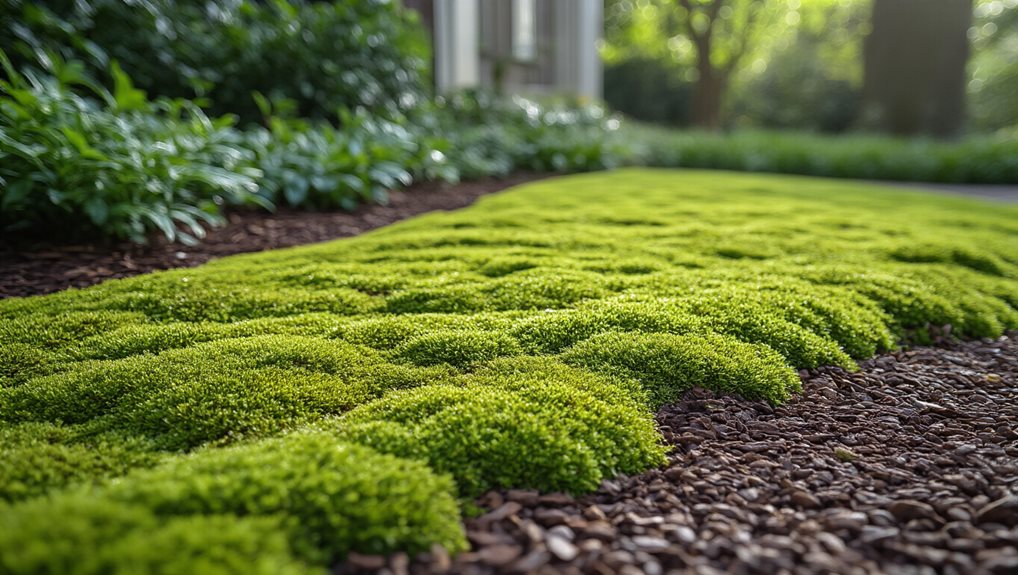
Where do you begin when swapping a traditional lawn for a low‑maintenance ground cover? Mow the grass short, then either sheet‑mulch with cardboard and 3‑8 inches of compost or rent a sod cutter for a one‑day root strip. After removal, level the soil, space large grasses five feet apart, and plant vigorous spreaders—like Rosemary or mazus—using plugs or cuttings, ensuring full coverage within a year.
Ground‑Cover Maintenance: Watering, Pruning, and Weed Control
When you shift from a traditional lawn to a low‑maintenance ground cover, maintaining proper moisture, timely pruning, and effective weed control become the pillars of a thriving terrain.
Water deeply once a week—one inch for well‑drained soils, two inches split for sand—checking moisture six inches down, and let it soak before the next cycle.
Prune lightly after flowering to encourage compact growth, and monitor weeds, removing them before they seed to preserve your cohesive, low‑maintenance oasis.
Final Note
Choosing the right ground‑cover hinges on matching sunlight, soil, and traffic conditions, then installing it with proper preparation and spacing. By selecting drought‑tolerant succulents for sunny spots, resilient clovers for high‑traffic areas, aromatic herbs for culinary appeal, and shade‑loving perennials for darker zones, you’ll create a low‑maintenance, attractive lawn alternative. Consistent watering during establishment, periodic pruning, and vigilant weed control will keep the mat healthy, ensuring your yard stays vibrant and functional year after year.