You can tackle backyard animal odors naturally by neutralizing smells at the source. Sprinkle baking soda or agricultural lime in damp areas to balance pH and inhibit odor-causing bacteria. Use diatomaceous earth to absorb moisture and deter pests. Place activated charcoal near problem zones to capture airborne compounds. Spray diluted essential oils or citrus-infused water for quick relief. Plant aromatic herbs like lavender or rosemary to freshen the air. For lasting fragrance, try homemade gel or wax fresheners—there’s more to optimizing each method effectively.
TLDR
- Sprinkle baking soda and agricultural lime in damp areas to neutralize odors and inhibit odor-causing bacteria.
- Use food-grade diatomaceous earth in pet zones to absorb moisture and control odor-contributing parasites.
- Place activated charcoal near odor sources to adsorb airborne VOCs and reduce organic decay smells.
- Apply fermented citrus enzyme cleaners or vinegar to break down uric acid and eliminate urine odors.
- Plant aromatic herbs like lavender and rosemary to naturally freshen air and deter animals from marking.
Use Baking Soda to Neutralize Odors at the Source
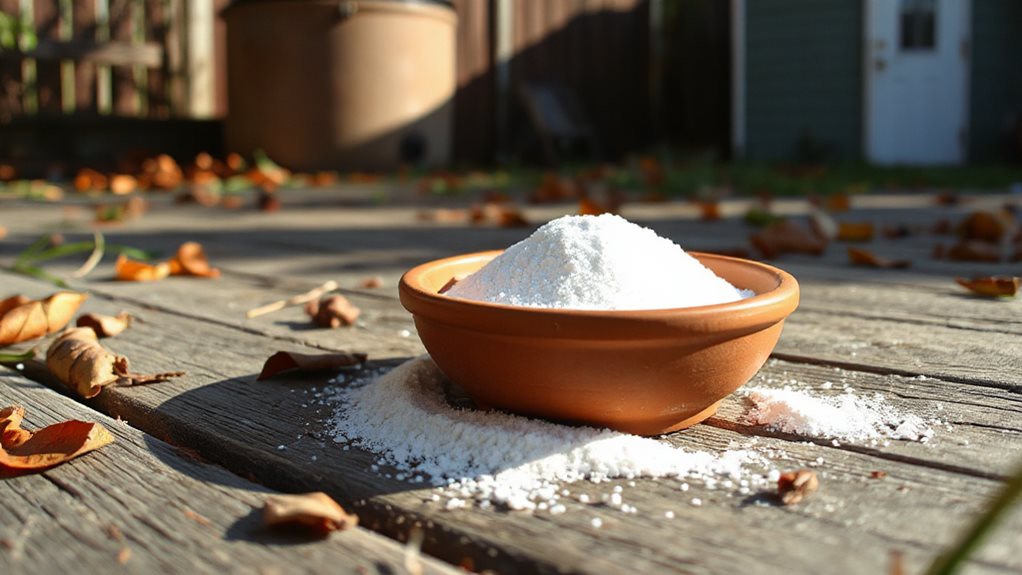
Tackle backyard odors at their core by using baking soda to neutralize, not just mask, the source of the smell.
You can rely on its amphoteric nature to chemically convert acidic and basic odor molecules, like those from animal waste, into less volatile compounds. Sprinkle it directly where decomposition occurs, ensuring contact with odor-causing substances for effective, safe, and affordable results. The alkaline nature of sodium bicarbonate helps neutralize acidic odors by acting as a buffering agent. Aerating and drying affected material first can reduce foul smells caused by anaerobic decomposition and improve overall odor control.
Apply Agricultural Lime to Reduce Bacterial Growth
You can tackle backyard odors at the source by applying agricultural lime, which raises the pH of litter and bedding to create an unfriendly environment for odor-causing bacteria.
It not only reduces ammonia and hydrogen sulfide gases but also dries out damp areas where pathogens thrive, helping keep your animals healthier.
Plus, since it’s made of natural calcium carbonate, it’s safe to use around pets and people while improving soil structure over time.
Cedar and other natural mulches can also help mask odors while improving moisture control and soil health.
Neutralize Odors at Source
Sprinkle agricultural lime where odors linger, and let its natural chemistry go to work.
It neutralizes ammonia from waste, reduces moisture, and creates an inhospitable environment for odor-causing bacteria.
Unlike sprays that mask smells, lime tackles the source.
Use it in kennels, stalls, or yards—its calcium carbonate base is safe around pets and people when applied correctly.
Improve Soil Health Naturally
Agricultural lime doesn’t just neutralize odors—it converts your backyard soil into a healthier, more balanced environment. By raising pH, you reduce harmful Al³⁺ and limit odor-producing bacteria thriving in acidity.
You enhance microbial activity, improve nutrient availability, and strengthen soil structure. With pH near 6.5, your soil supports better plant growth while naturally suppressing unwanted bacterial dominance, creating a cleaner, more resilient outdoor space you can feel good about.
Deploy Activated Charcoal for Airborne Odor Removal
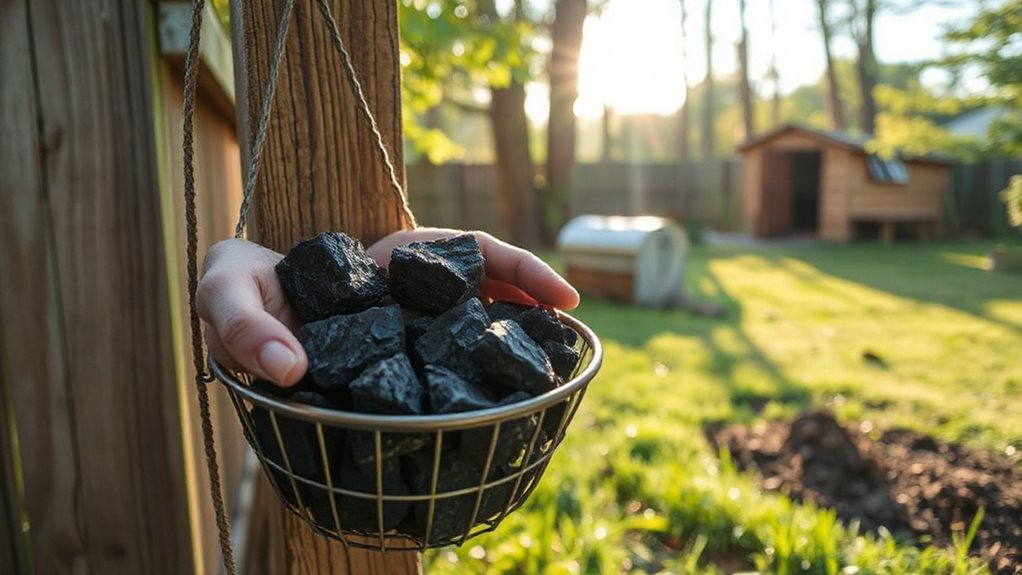
Tackling stubborn backyard odors starts with employing the proven power of activated charcoal, a highly effective, science-backed solution for capturing airborne pollutants at the molecular level.
You can place it in sachets or use fixed-bed systems to reduce smells from animal waste by adsorbing VOCs like ethylmercaptan.
It’s cost-effective, reusable, and works best when positioned near odor sources, offering reliable, natural air purification for your outdoor space.
Mold and organic decay in compost can also produce odors, so managing proper aeration and moisture helps reduce smell and complements charcoal-based odor control.
Sprinkle Diatomaceous Earth in High-Traffic Pet Areas
While activated charcoal excels at capturing airborne odors, managing smells at their source—especially in areas where pets spend the most time—requires a more targeted approach.
Sprinkle food-grade diatomaceous earth in pet bedding, litter boxes, or soil where animals frequent; its porous structure absorbs moisture and oils, reducing odor naturally. It also controls parasites that contribute to bad smells, offering a safe, cost-effective solution you can trust for long-term freshness. This practice can also help discourage wildlife by reducing attractants such as unsecured trash.
Create Essential Oil Sprays for Quick Odor Relief
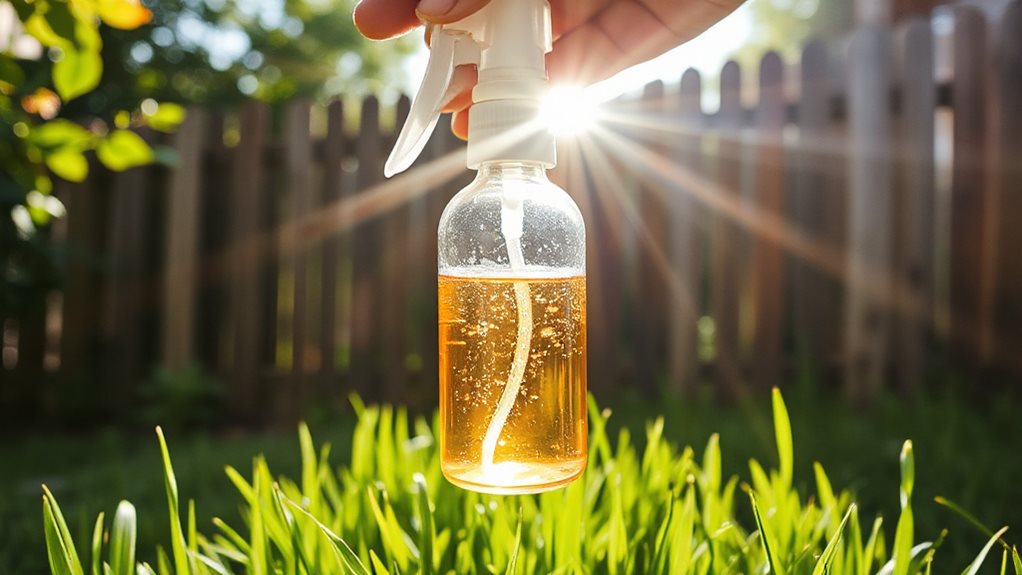
Refresh your outdoor spaces quickly by employing the natural power of essential oils to neutralize stubborn pet odors. You can create effective sprays using lavender, lemon, or tea tree oil, diluted properly in water and vodka for even dispersion.
Always choose pet-safe oils, make certain good ventilation, and avoid overuse. These natural solutions freshen surfaces, bedding, and carpets safely while supporting a clean, welcoming backyard environment for both you and your pets. Consider also incorporating durable, low-maintenance materials for outdoor furnishings to reduce odor-harboring fabrics and simplify cleaning low-maintenance options.
Utilize Citrus Peels to Combat Persistent Urine Smells
You can effectively combat persistent urine smells in your backyard by leveraging the natural power of citrus peels, which offer both enzymatic and acidic properties ideal for breaking down tough organic residues.
Use fermented citrus enzyme cleaners or vinegar infusions to target uric acid, or apply lemon juice and baking soda paste on stubborn spots.
Scatter dried peels or spray solutions outdoors to neutralize odors, deter repeat marking, and leave a fresh, clean scent naturally.
Boil Citrus Rinds for Natural Outdoor Deodorizing
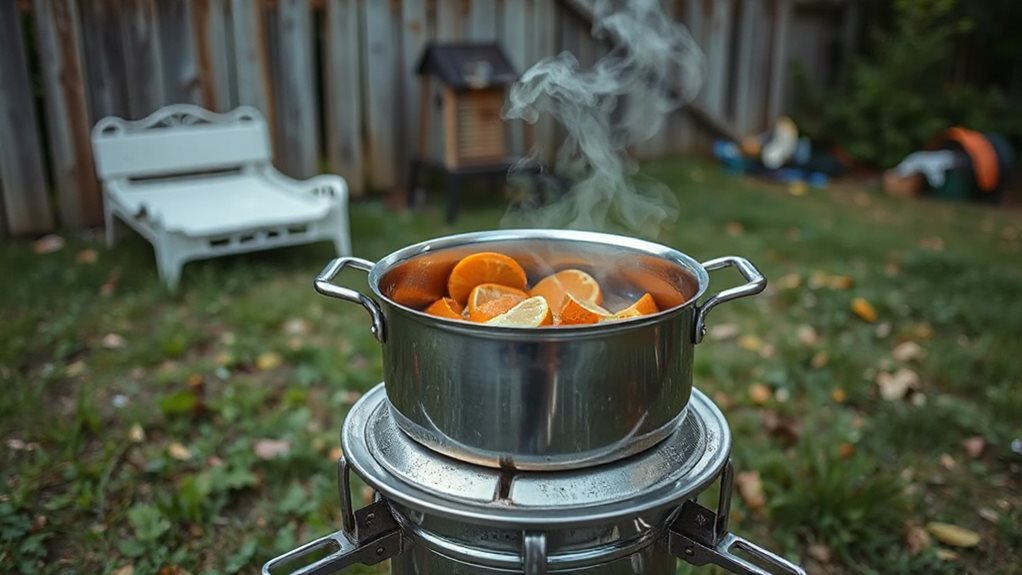
Citrus peels don’t just work their magic when fermented or dried—they also release powerful deodorizing properties when boiled, making this simple kitchen method a smart choice for tackling outdoor odors.
Just add peels to water, simmer for 2–3 hours, and let the steam carry natural D-limonene and essential oils through your space.
For richer scent, toss in cinnamon or cloves.
It’s an affordable, eco-friendly way to freshen air near patios or entryways—no chemicals needed, just scraps you already have.
Infuse Water With Crushed Citrus for All-Purpose Spray
While boiling citrus peels releases their deodorizing power through steam, crushing them to infuse water creates a versatile, ready-to-use spray that actively breaks down odors at the source.
You’ll steep the crushed peels in warm water, strain the liquid, and apply it directly to problem areas. This natural solution tackles pet smells, grease, and waste odors without harsh chemicals, making it safe and effective for your outdoor spaces.
Plant Aromatic Herbs to Freshen and Purify the Air
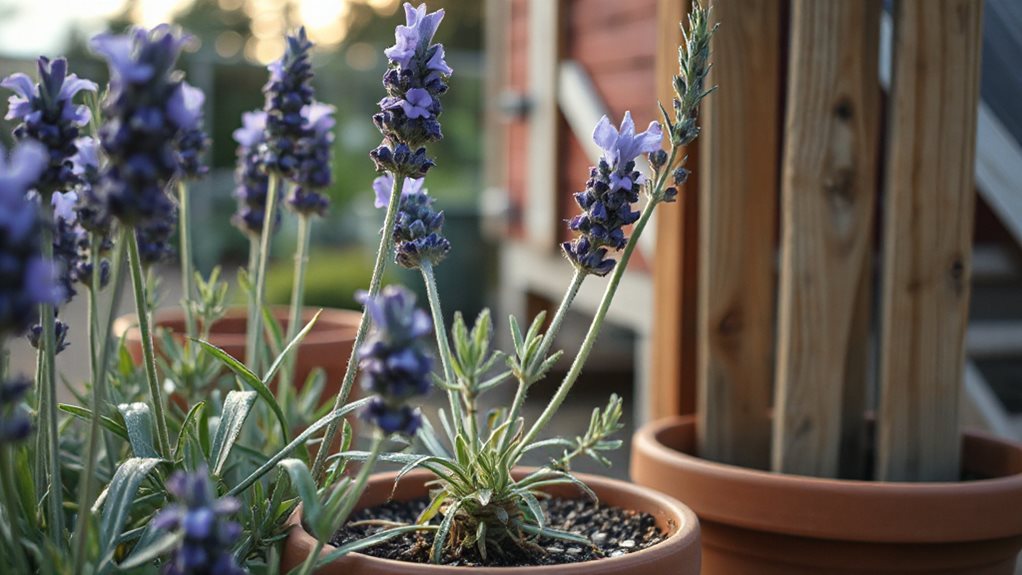
You can freshen your backyard naturally by planting aromatic herbs like rosemary, lavender, and mint along borders, where their fragrance and metabolic processes help purify the air.
These plants don’t just smell great—they release essential oils with proven antibacterial and antiviral properties that reduce airborne pathogens and neutralize odors.
With proper placement and minimal care, herbs such as eucalyptus and lemon balm actively improve air quality while creating a more pleasant outdoor environment.
Grow Fragrant Herb Borders
Creating fragrant herb borders converts your backyard into a naturally scented sanctuary while helping mask unwanted animal odors.
Plant lavender, lemon thyme, or dianthus along paths where brushing releases their scent. Pair with sage or star jasmine to attract pollinators and add depth.
These herbs thrive in full sun, return yearly, and require little water, making them ideal for low-maintenance, aromatic borders that unify beauty and function.
Harness Natural Antibacterial Properties
Tap into the natural antibacterial power of aromatic herbs to freshen and purify the air in your backyard. Grow turmeric, neem, and ginger to reduce airborne pathogens and support detoxification.
Add basil and eucalyptus, whose essential oils combat bacteria, viruses, and mucus. Together, these plants create a cleaner, healthier outdoor space, letting you breathe easier while naturally controlling odors with nature’s own purifiers.
Maintain Lawn Health With Regular Watering Practices
Consistently maintaining a healthy lawn begins with smart watering practices that support deep root development and resilience.
Water deeply 2–3 times weekly, providing 1–1.5 inches total, to encourage drought tolerance. Adjust frequency seasonally—less in spring and fall, more in summer heat.
Always water early in the morning to reduce evaporation and fungal growth, ensuring your lawn stays strong and odor-resistant.
Make Homemade Gel or Wax Air Fresheners for Lasting Effect
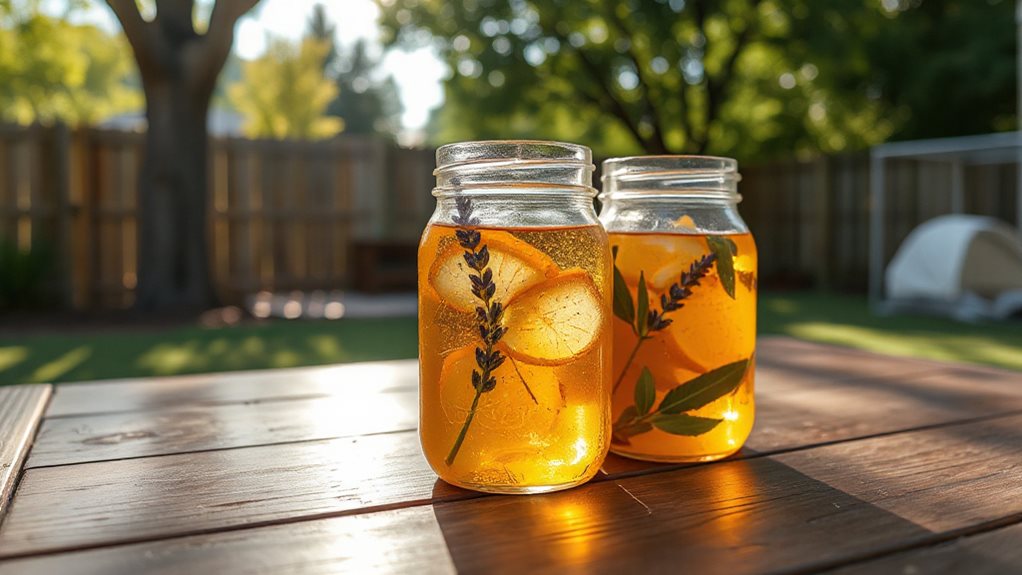
Beat stubborn backyard odors with long-lasting, homemade gel or wax air fresheners that neutralize smells naturally.
Mix water, gelatin, salt, and vodka, then add essential oils like cedarwood or lavender for lasting scent.
Use agar-agar for a vegan option.
Melt soy wax, blend with peppermint or citrus oils, then pour into jars.
These simple, affordable fresheners keep your outdoor space smelling clean and inviting—naturally.
Final Note
You can effectively manage backyard animal odors using natural, accessible solutions. By combining odor-neutralizing agents like baking soda and agricultural lime with air-purifying methods such as activated charcoal and essential oil sprays, you target smells at both the source and in the air. Regular maintenance, including proper watering and planting aromatic herbs, sustains a fresher environment. These practical, eco-friendly strategies work together to keep your outdoor space clean, healthy, and more enjoyable for everyone.